The Science of Saturday Success: Beating the ‘Forgetting Curve’ One Week at a Time
We can all relate to the student who spends an entire weekend afternoon meticulously revising a complex topic in Mathematics or a nuanced interpretation in History, reaching a point of seemingly genuine mastery, only for that knowledge to inexplicably vanish by Monday morning.
For parents and teachers, this is a familiar frustration; for students, it can often feel like a personal failing. Yet this phenomenon is not a reflection of ability or diligence. It is a fundamental characteristic of human biology.
In 1885, the German psychologist Hermann Ebbinghaus pioneered the scientific study of memory and identified what he termed the Forgetting Curve, the exponential rate at which newly acquired information is lost when no conscious effort is made to retain it.
At Rossall, we steadfastly refuse to let hard-won knowledge slip away.
Why Saturday Papers Matter
The Saturday Papers series was designed not simply as additional practice, but as a sophisticated, evidence-based intervention rooted in cognitive science. By understanding the mechanics of memory, we have transformed our Saturday mornings into a strategy for long-term academic success.
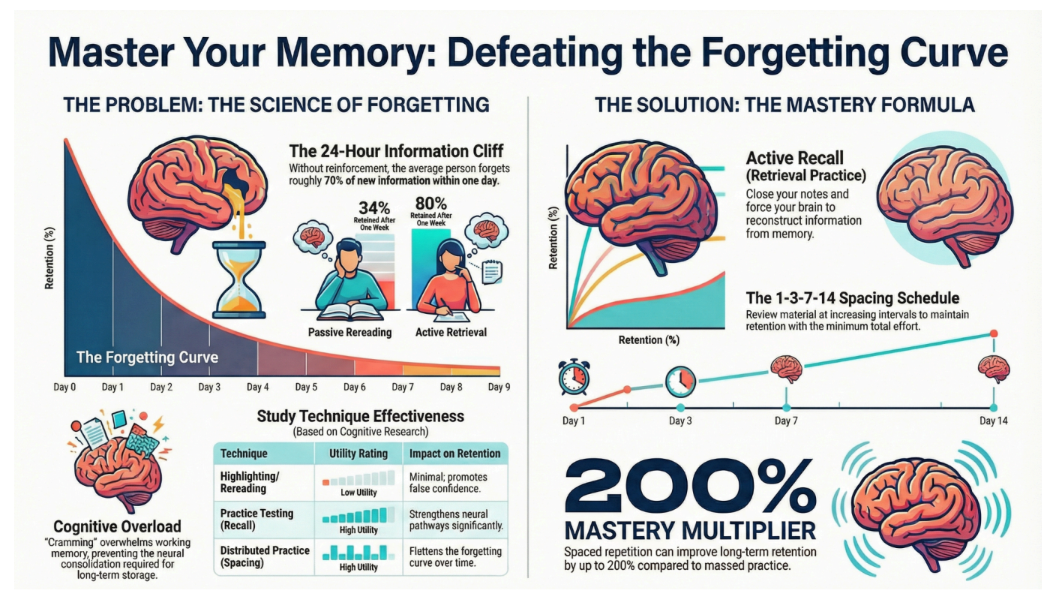
The statistics surrounding memory loss are sobering. Research suggests that we forget approximately 50% of newly learned information within a single hour. Within 24 hours, that figure rises to nearly 70%. If a student engages with a topic only once during a revision session, they are effectively battling a biological tide that erases much of their effort by the following day.
Ebbinghaus developed what he called the Method of Savings to measure retained learning after initial study. His findings remain highly relevant today:
“Memory declines steeply soon after learning, then levels off.”
Importantly, Ebbinghaus also recognised that the meaningfulness of material can alter the curve. This is why our teaching staff work so diligently to connect new concepts to prior learning through Do Now activities and retrieval practice tasks in every lesson.
However, even meaningful learning requires reinforcement. Without structured intervention, as much as 90% of a week’s learning may be lost within seven days.
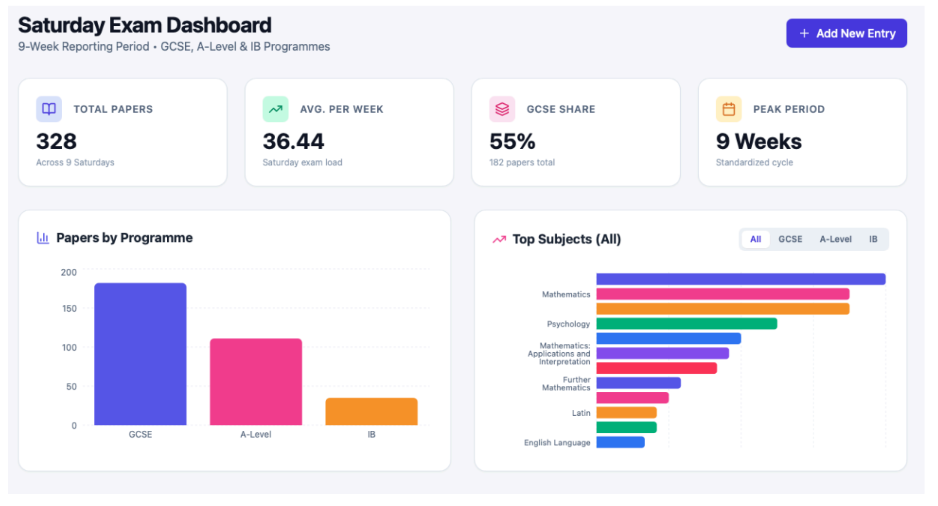
Strength in Numbers: 328 Papers Redefining Our Revision Culture
The response from both our boarding and day communities has been nothing short of extraordinary.
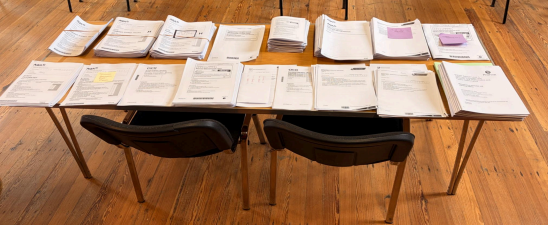
Over the past nine weeks, the quiet focus of the Old Gym and Big School, alongside the purposeful bustle around campus every Saturday morning, has become the backdrop to a massive collective exercise in active recall.
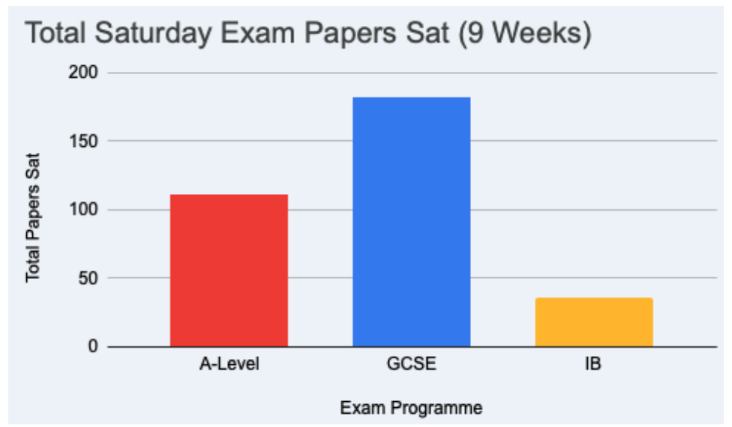
As of 2 May, students have completed a remarkable 328 examination papers, spanning:
GCSE: 182 papers
A-Level: 111 papers
IB Diploma: 35 papers
With sessions running at both 10am and 2pm, and peaks of up to 60 students attending a single sitting, this initiative has become far more than a revision clinic. It represents a genuine cultural shift.
By choosing to sit these papers, students move beyond passive revision strategies such as rereading notes or highlighting text. Instead, they engage in the metacognitive effort required to retrieve information from long-term memory, the single most effective method for strengthening the neural pathways associated with learning.
Spaced Practice vs Cramming
In the lead-up to examinations, many students naturally gravitate towards “cramming” or massed practice: long, intensive revision sessions completed in a single sitting. While this can create a fleeting sense of confidence, cognitive science consistently demonstrates that it is a false economy.
Research into spaced practice shows a clear and consistent trend: students who distribute their revision over time significantly outperform those who rely on massed revision, even when the total amount of study time is identical.
As one study concluded:
“Spaced practice requires the learner to plan and implement a study schedule across time, thus demanding greater metacognitive effort.”
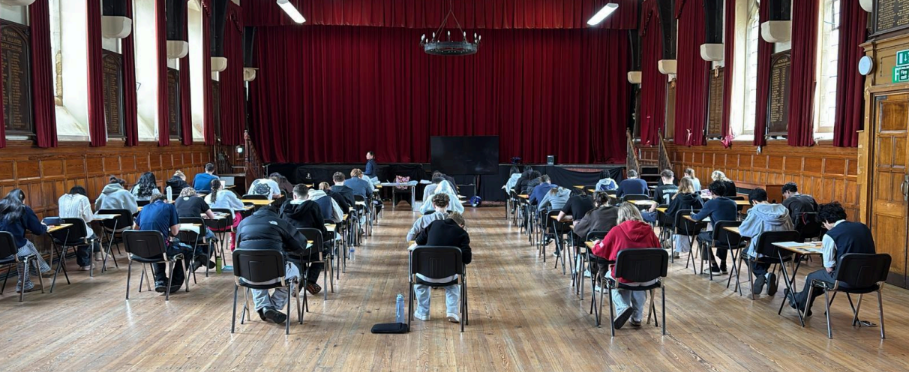
The Saturday Papers series was intentionally designed to interrupt the forgetting curve at its steepest point. It compels the brain to retrieve information precisely as it begins to fade, strengthening long-term retention.
We encourage students to view Saturday not as their only opportunity for past-paper practice, but as the anchor point for a wider programme of distributed retrieval throughout the week.
The Power of Low-Stakes Practice
One of the most important aspects of the Saturday Papers programme is that participation remains entirely optional and voluntary.
This is a deliberate strategic choice.
In high-stakes environments, the brain’s stress-response system can trigger elevated cortisol levels, which actively hinder both memory retrieval and the formation of new memories. By creating low-stakes, supportive conditions, we minimise this stress response and allow students to engage more effectively with the revision process.
These sessions also provide immediate diagnostic feedback, not simply through mark schemes or teacher comments, but through students’ own realisation of what they truly know versus what they only thought they knew.
This process helps students identify knowledge gaps early, refine revision strategies, and build confidence in a calm, focused environment long before entering the examination hall itself.
A Collective Effort
At this point, it is important to express heartfelt gratitude to our staff.
To work alongside colleagues capable of turning around such high volumes of diagnostic feedback each week, in addition to their regular planning, teaching, and marking commitments, is genuinely humbling. Their dedication is what sets Rossall teachers apart.
Equally, the commitment shown by our students each Saturday is testament to their growing resilience and maturity.
Memory is not a static gift bestowed upon a fortunate few; it is a muscle, strengthened through repeated metacognitive effort. Every time students sit down with a paper at 10am on a Saturday morning, they are doing far more than revising content.
They are developing discipline, resilience, self-awareness, and intellectual confidence, qualities that lie at the heart of a successful Rossall education.
Looking Ahead
Students may continue to sign up for Saturday Papers from 10am every Monday until their final examination. Registration forms remain open until midday on Thursday to allow time for organisation and exam-room preparation.
For further revision guidance, as well as advice on managing stress and anxiety during examination season, please visit the Rossall Revision Hub.
— Mr David Clarke, Deputy Head (Academic)