
What Value Added Means in Food and Nutrition
In education, the term value added is often used to describe the academic progress pupils make from their starting points to their final outcomes. It is a measure of growth beyond expectation, and it is one of the ways schools reflect on the effectiveness of teaching and learning. In Food and Nutrition, this measure is particularly striking. Our GCSE results consistently demonstrate value added well above the national average, evidence of the close attention given to each individual and the commitment of pupils to achieve their best.
Yet in Food and Nutrition, value added goes far beyond examination of statistics. The lessons pupils take from this subject remain with them for life. The ability to plan, prepare and cook food independently is a skill that builds confidence and resilience. Understanding the principles of nutrition enables our young people to make informed choices about their own well-being. Knowing how to work safely and hygienically is a lesson in responsibility and care for others. These are not just classroom achievements; they are lifelong competencies.
At Rossall, Food and Nutrition is part of a pupil’s journey from the very earliest years. Many of our children begin developing their skills in the kitchen from nursery age, and this continuity allows knowledge and confidence to grow steadily through Prep School into the Senior years. By the time pupils reach GCSE, they have not only developed strong technical skills but also a deep awareness of the role food plays in health, culture and society.
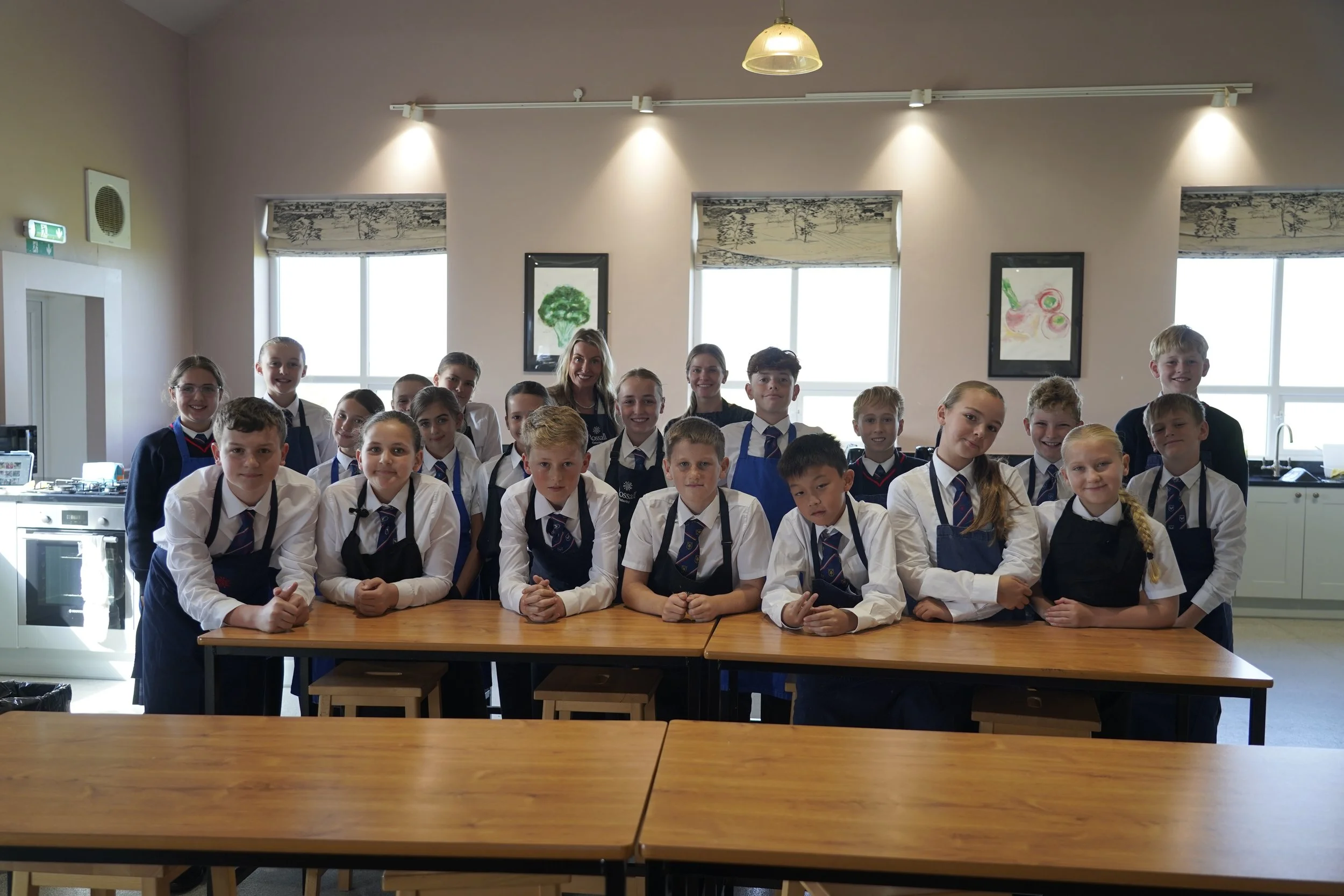
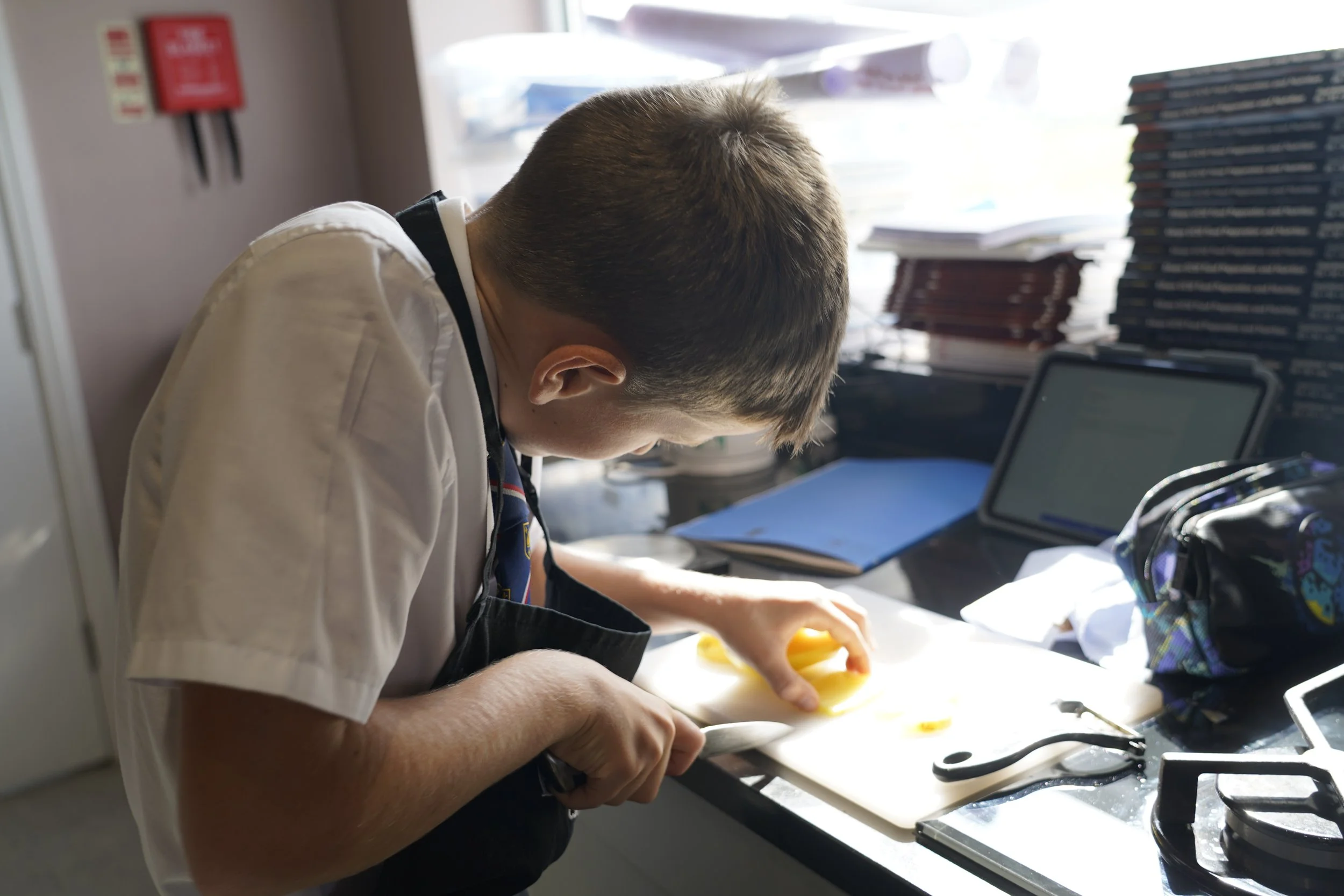
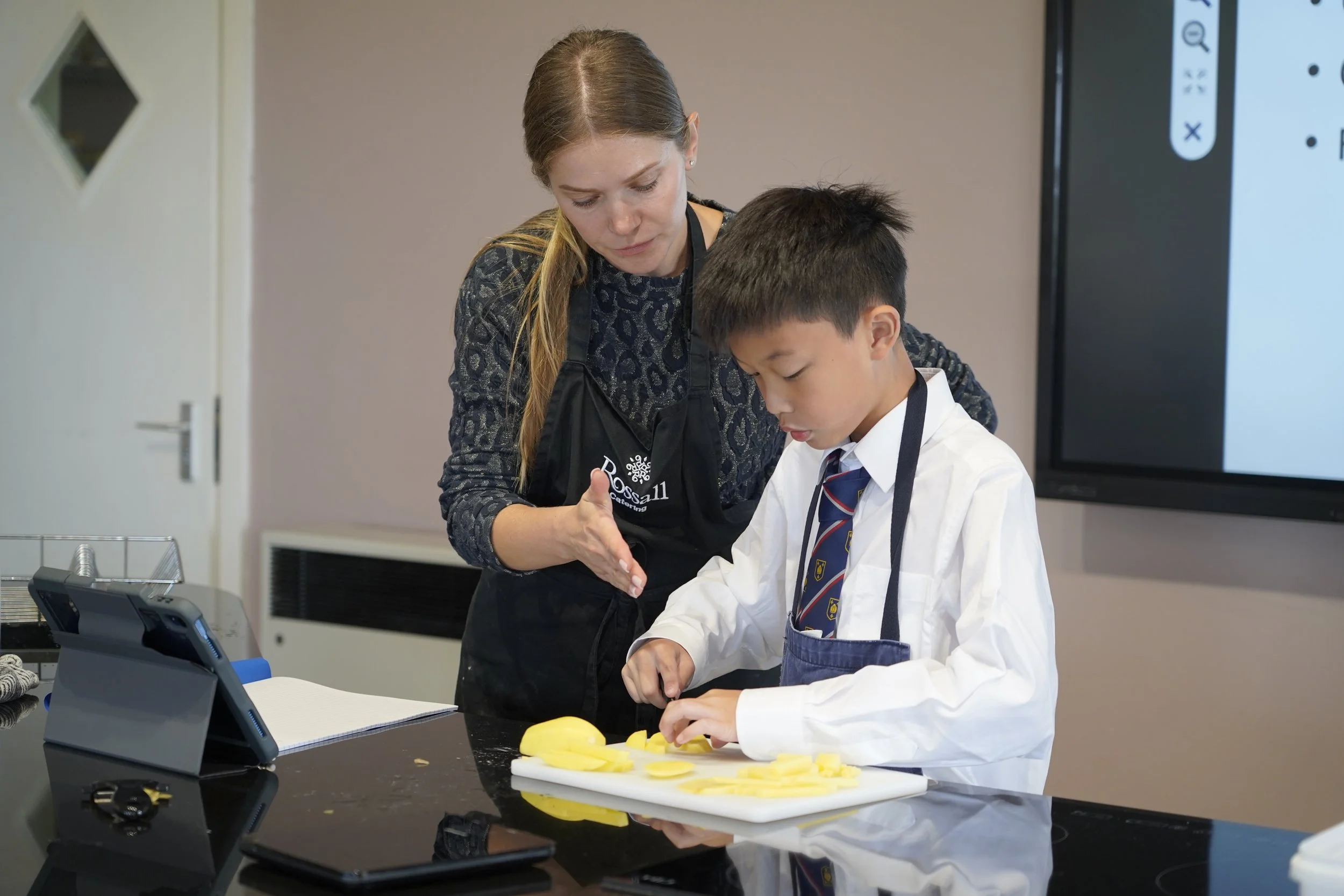
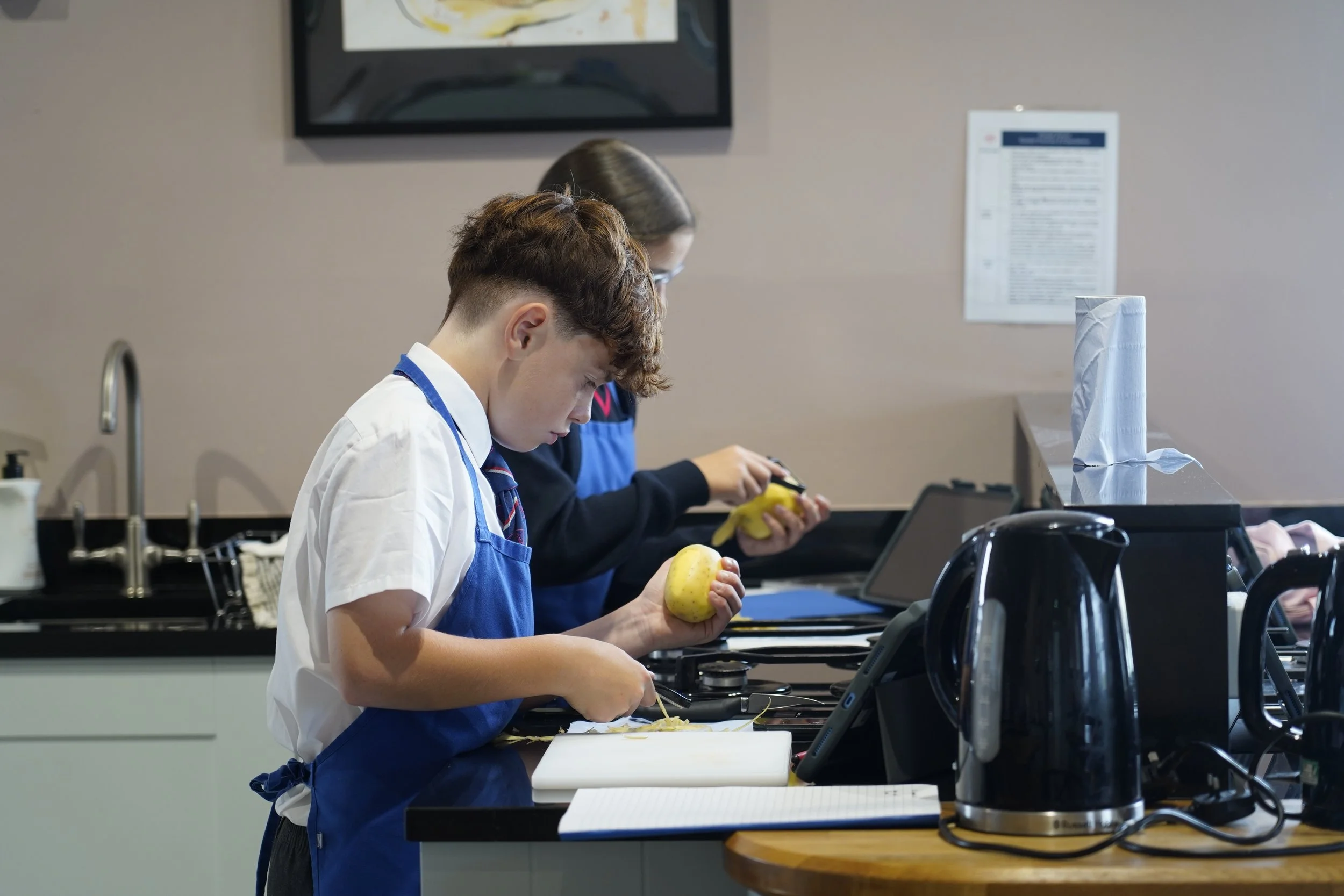
For our international students, the experience can be particularly enriching. In many countries, Food and Nutrition is not part of the curriculum, so the opportunity to engage with it here opens up entirely new avenues of learning. This brings a richness to our classrooms: pupils share traditions and perspectives from their own cultures while discovering new ones, and food becomes a medium through which we learn respect, empathy and curiosity about the wider world.
Food and Nutrition at Rossall also encourages reflection on issues of global importance. We explore provenance and sustainability, helping pupils to understand where food comes from and the impact our choices have on the environment. We consider seasonality and waste, and we discuss the ethical decisions that shape our diets. In doing so, pupils learn that food is never just about what is on the plate; it is also about the world beyond the kitchen.
It is this combination of measurable academic progress and profound personal development that makes value added in Food and Nutrition so meaningful. Yes, our pupils achieve outstanding results, but more importantly, they leave with memories, skills and values that will serve them throughout their lives. They will remember the joy of baking bread, the pride of sharing a meal they prepared, and the sense of connection that comes from cooking alongside friends from many different backgrounds.
Value added in Food and Nutrition, then, is not simply about data. It is about enriching lives, nurturing independence, and ensuring that every child leaves Rossall with the knowledge, skills and confidence to thrive, both in the examination hall and far beyond it.
Mrs Clare James, Head of Food & Nutrition, Assistant Head (Pupils).
