
15 Minutes a Day Beats the ‘Forgetting Curve’
Reaching the October half-term is an undeniable milestone, and here I am revisiting a topic I wrote about at this time last year…
After seven weeks of sustained effort through this long and demanding autumn opening stretch, students, parents, and teachers have earned a well-deserved rest! The half-term break offers a vital chance to recharge and enjoy some unstructured time.
However, this break also presents a familiar educational dilemma: the temptation to disconnect completely from ‘academic life’ versus the stark reality of the post-holiday slump and rapid knowledge decay. When learning halts for a week or two, students often return to the classroom feeling a little rusty and struggling to regain momentum. Fortunately, holiday rest and learning retention do not have to compete.
By dedicating just 15 minutes a day to focused, active micro-sessions, students can flatten the forgetting curve, protect their hard-earned progress, and still enjoy plenty of downtime, which is vital for year groups with upcoming Trial Exams and in-class assessments after the break.
Hermann Ebbinghaus and Retrieval Practice
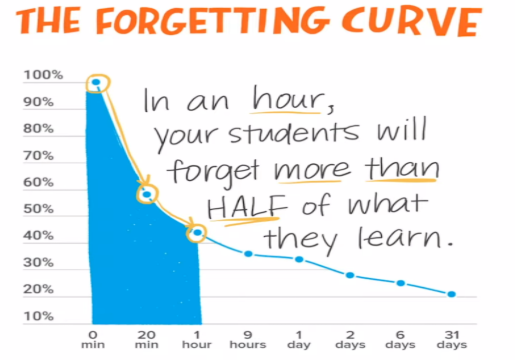
The post-holiday academic slump is not a personal failing; it is a well-documented mechanism of human memory. In 1885, German psychologist Hermann Ebbinghaus mapped the exponential rate at which newly acquired information fades without consolidation, a trajectory he called the Forgetting Curve. Without active review, memory declines sharply almost immediately following learning:
The Ebbinghaus Forgetting Curve
1 Hour After Learning: ~50% of unreinforced knowledge is lost.
24 Hours After Learning: ~70% of unreinforced knowledge is lost.
1 Week After Learning: 75% to 90% of unreinforced knowledge is lost.
To combat this, students often rely on passive study habits like highlighting textbooks or rereading class notes. However, cognitive science, the science of how we learn, shows that these methods offer a false sense of security. In a landmark study, Dunlosky et al. (2013) evaluated ten common study techniques and rated highlighting, rereading, and summarising as low-utility strategies. Rereading creates visual familiarity, recognising a topic on a page, but without building durable, retrievable memory traces. In contrast, they rated practice testing (active recall) and distributed practice (spaced repetition) as high-utility strategies. Active retrieval practice requires learners to pull information directly from memory rather than passively consuming it.
In another study, Roediger & Karpicke (2006) showed that a single retrieval test dramatically outperforms passive review. After one week, students who only reread material retained only 34%, whereas those who actively retrieved the material achieved 80% retention. Furthermore, Karpicke & Blunt (2011) showed that retrieval practice produced 50% more correct responses on comprehension tests than elaborative studying with concept mapping, proving that testing oneself is superior even to popular "active" note-making techniques.
Learning Approach & Cognitive Mechanism
This effortful reconstruction consolidates neural pathways, systematically shifting knowledge from ‘temporary storage’ into stable neocortical structures. Crucially, keeping review sessions brief manages cognitive load, keeps working memory within its natural capacity, and prevents cognitive fatigue.
Spaced Repetition & Micro-Sessions
The most efficient antidote to memory decay combines active recall with spaced repetition, spacing review sessions over increasingly long intervals.
Micro-Sessions (10-15 Minutes)
Marathon study sessions (think: cramming the night before an exam) overwhelm working memory, trigger cognitive fatigue, and induce procrastination - a topic I might cover next time! In contrast, 10-to-15-minute micro-sessions require minimal activation energy. They fit seamlessly into holiday plans, leaving most of the day for complete relaxation.
Expanding Intervals: The 1-3-7-14 Day Model
Research by Dobson (2012) shows that expanding retrieval practice, gradually increasing the time gap between review sessions, yields better long-term retention than uniform review intervals.
Day 1: First retrieval review 24 hours after initial learning.
Day 3: Second retrieval review 2–3 days later.
Day 7: Third retrieval review 1 week later.
Day 14: Fourth retrieval review 2 weeks later.
Each deliberate recall event flattens the forgetting curve, making the memory trace progressively more resilient.
Mindset & Effort: Working Smarter, Not Harder
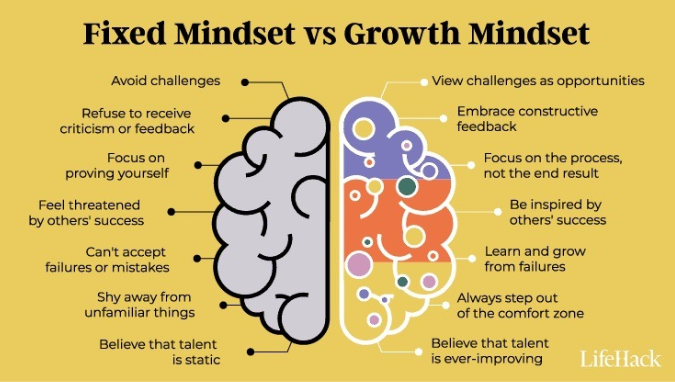
Protecting academic progress over half-term requires a balanced mindset grounded in Carol Dweck’s research on growth mindset, which I recently discussed in Assembly. A fixed mindset sees difficulty or forgotten items as proof of limited ability, leading to either total avoidance or anxious perfectionism. A growth mindset recognises that challenge strengthens neural pathways and views mistakes not as failures, but as useful information pointing to what needs practice.
Navigating the Three Learning Zones
The Sofa Zone (Comfort Zone): Easy, familiar, snacks on hand, zero challenge, and zero cognitive growth!
The Zone of Proximal Development (ZPD): This is the sweet spot - challenging, slightly uncomfortable, but entirely achievable with effort, effective strategies, and support.
The Panic Zone: Overwhelming, threatening, last-minute cramming, confusing working memory.
Working smarter means escaping the "Sofa Zone" without plunging into "Panic Zone" cramming or absurd perfectionism. As teachers know all too well, extreme revision is counterproductive. Real learning requires an honest 100% effort: focused, thoughtful, realistic engagement within the Zone of Proximal Development.
Actionable Strategies for Students, Parents, and Teachers
For Students: Ditch the Passive Rereading and Embrace 'Failing Forward'
Execute Retrieval Sprints: Replace highlighting with 10-to-15-minute timed recall sessions. Use flashcards, digital flashcard platforms, or past-paper questions to force your brain to work to retrieve answers. See our Revision Hub for effective strategies to help you revise and recall.
Conduct Blank-Page Brain Dumps: After reviewing a topic brief, close your books completely. On a blank piece of paper, sketch or write down every fact, formula, or argument you can recall from memory. Only open your notes afterwards to spot missing details.
Treat Errors as Diagnostic Feedback: If you struggle during a brain dump, do not panic or give up. Treat forgotten information as useful information highlighting gaps to target in your next micro-session.
Choose Excellence Over Perfection: Perfectionism delays starting until you feel "100% confident." Excellence starts even when unsure, gives an honest attempt, and uses mistakes to improve the next effort.
For Parents: Protecting Rest While Fostering Light Consistency
Establish a Gentle Morning Micro-Routine: Encourage a fixed 10-to-15-minute review block early in the morning. Completing this first thing minimises the cognitive fatigue built up over holiday rest, outings, or screen time, leaving the rest of the day completely free for personal time or family activities.
Implement Gradual Sleep Adjustments: Sleep is essential for consolidating memories and regulating emotions. Towards the end of the break, adjust sleep routines in gentle 15-minute daily increments to make re-entry to the school schedule smooth and painless.
Eliminate Last-Minute Panic: Brief, daily check-ins reduce the anxiety of night-before cramming, keeping home environments calm and supportive.
For Teachers: Easing Re-Entry and Lowering Anxiety
Start with Low-Stakes Retrieval Quizzes: Open your first lessons back with a 5-minute, ungraded starter quiz - ‘Last lesson, last topic, further back’... This reactivates dormant neural pathways established before the break without triggering performance anxiety.
Interleave Recent Topics with Worked Examples: Combine pre-break content with clear worked examples to scaffold learning inside each student's Zone of Proximal Development. Pairing prior recall tasks with fresh scaffolding prevents students from dropping into the "Panic Zone." Remember that external support works like scaffolding around a building during construction - it provides necessary stability early on, then comes away naturally as the internal structure grows stronger.
Re-establish Predictable Routines: Use familiar classroom entry routines on day one to reduce working memory load and alleviate return-to-school nerves.
Small Efforts, Big Impact
Protecting hard-earned academic progress does not require sacrificing the joy and relaxation of a half-term holiday.
By swapping hours of passive rereading for 15 minutes of daily active retrieval practice, students can flatten the forgetting curve, consolidate neural connections, and maintain their mental sharpness.
Small, consistent efforts during the break protect previous achievements and pave the way for a confident, successful second half of the autumn term.
Rest well, work smartly, and celebrate both downtime and progress!
Mr D. Clarke, Oct 2026
