Brain at ‘Baggage Claim’: A Guide to Beating the Post-Holiday Forgetting Curve!
“Welcome back to school, everyone! I hope that the half-term break has been restful and enjoyable! If your child seems a little ‘rusty’ or sluggish during the first few days back at school after a holiday, you are not alone! The good news is that you are not the only one noticing; this phenomenon affects all of us. Likewise, the bad news is that it affects all of us and is something we need to learn to work around. This is not a sign of laziness or a lack of motivation; it is a physiological reality of the brain’s recalibration process. Our brains are brilliant at processing and storing information from all the various sources we encounter… and they are also very good at forgetting that information. During holiday periods, our children experience high levels of autonomy and novelty, which keeps the brain’s reward system lit up with dopamine.
As parents, we can help our children navigate school ‘re-entry’ by understanding that the shift back to structure is energy-intensive. The brain must move from a state of pure novelty back into ‘planning and self-control mode’. This transition often triggers a brief surge in stress hormones such as cortisol and adrenaline. Think of this as the brain’s way of ‘landing the plane’ (one of many aviation references here!) - it’s a gradual descent that requires significant biological fuel, often leaving our children feeling slower or flatter than usual.
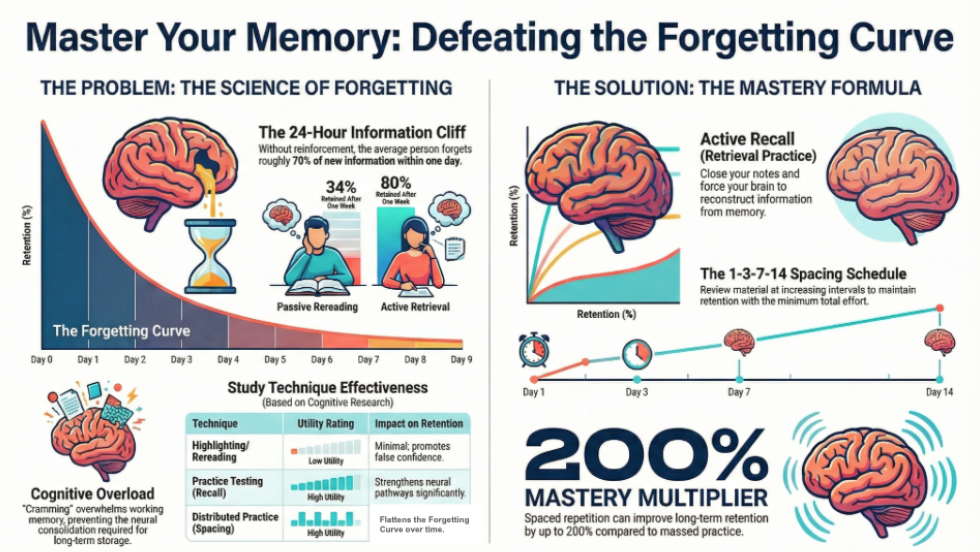
The 70% Cliff: The Staggering Speed of Forgetting
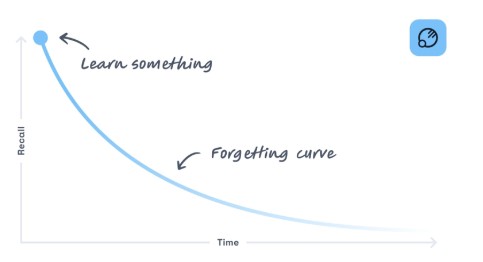
The greatest obstacle to a successful school return is what learning scientists call the ‘Forgetting Curve’. Documented by the German psychologist, Hermann Ebbinghaus, in 1885, this curve shows that without active reinforcement, newly acquired knowledge doesn't just fade - it falls off a cliff.
The rates of decline are truly staggering:
50% of new information is forgotten within just one hour.
70% is lost within the first 24 hours.
90% - nearly the entire ‘payload’ of learning - vanishes within a week if no effort is made to retain it.
By the time a week has passed - as it has recently done over the half-term holiday - most students retain only about 25% of what they studied if it has not been reinforced. This is why our kids often know the material but simply can't ‘find’ it in their heads; it’s a retrieval crisis that makes previous effort feel wasted.
The Retrieval Secret: Think Like a ‘Retrieval Coach’
Don’t despair! The forgetting curve is not as relentless as it might initially seem - the secret to combating it lies in repetition. To help your child avoid the 70% crash, we need to shift our mindset. Ahead of assessments, tests, and exams, think of your role as a parent as a ‘retrieval coach’ rather than a ‘study monitor’. Cognitive science identifies Active Recall (the ‘Testing Effect’) as the single most effective way to learn. Instead of having your child reread a textbook, have them close the book and try to explain the concept from memory. The landmark research by Roediger and Karpicke (2006) tells the story clearly:
The Retrieval Group: Students who took a recall test retained 80% of the material after one week.
The Reread Group: Students who simply reviewed the material twice retained only 34%.
When your child struggles to remember an answer during a low-stakes quiz at home or in the car, they might feel like they are ‘failing’. Remind them that this struggle is actually an important learning experience. Even an unsuccessful attempt at recall signals to the brain that the information is important, which dramatically improves future retention.
"Each successful recall strengthens the memory trace, making it easier to access next time. Even unsuccessful attempts at recall improve subsequent learning, because the effort itself signals to your brain that this information matters…" Recallify
The "1-3-7-14" Strategy: Keeping the Flight Path Steady
While Active Recall is the ‘how’, Spaced Repetition is the ‘when’. To move information from short-term ‘cargo’ into long-term storage, we must interrupt the forgetting process at increasing intervals. For maximum effect, these intervals should be shorter initially and become more spaced out over time.
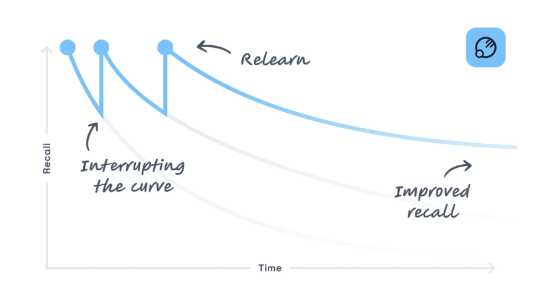
The first 24 hours are the most critical window to prevent a total memory wipe. According to the Thrive Centre at the University of Arizona, an optimal spacing schedule looks like this:
Day 1: Review 24 hours after initial learning.
Day 3: Review two days after the first session.
Day 7: Review one week after the initial lesson.
Day 14: Review two weeks after the start*
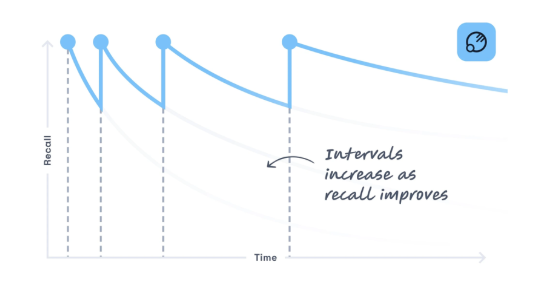
*Sidenote for Busy Families: Don't let a rigid or packed schedule become another source of stress. The science is clear: any interval of review is always better than nothing. If you miss Day 3, just pick it up on Day 4. The goal is consistency over perfection to keep the memory flight path steady! It is also important to note that the duration of each interval is not fixed and depends on the individual and what they are learning.
Why ‘Mixed Up’ Study Beats the Sunday Night/Pre-Exam Cram
Most students prefer ‘massed’ or ‘blocked’ practice - the classic Sunday night or night-before-an-exam cram session! True, it feels productive because it creates a sense of fluency or ease. However, this is a metacognitive error. Feeling easy is often a sign of forgetting fast. Researchers like Dunlosky (2013) rate cramming as ‘low utility’. Instead, encourage Interleaved Practice. This means mixing up different topics in one sitting.
The ‘Fluency’ Trap: Cramming feels good because the information is in the short-term working memory, but it rarely sticks.
Productive Failure: Interleaving is harder because it forces the brain to ‘tell ideas apart’.
Exam Readiness: Mixing topics prepares the brain for the actual exam, where questions are very rarely, if ever, grouped by chapter or as expected!
Sleep: Moving Baggage to Permanent Storage!
If we think of the brain as an airport (do bear with me!), sleep is the crew that moves ‘baggage’ from the hippocampal loading dock (short-term) to the neocortical warehouse (long-term)! This process, called ‘memory reactivation’, is when the brain replays and strengthens the day’s neural pathways.
For a child whose sleep routine has slipped, the effects can mirror ADHD - impulsivity, irritability, and a total lack of focus. To reset their internal clock, try these evidence-based tips:
The 15-Minute Rule: Move bedtime and wake-up times earlier by 15-minute increments every two nights.
Morning Light: Get your child into natural sunlight as soon as they wake to help reset the biological clock.
Healthy Habits: Turn off devices 1-2 hours before bed to help the body wind down. Pro Tip: if using an Apple device, it is well worth setting up Focus and programming a sleep schedule! See here for using Android’s ‘Balance Features’ and other digital wellbeing tools.
Conclusion: Landing the Plane Gradually

‘Landing the plane’ after a holiday requires a gradual descent, not a sudden drop. As we support our children through this transition, remember that the ‘slump’ is almost always a retrieval problem, not a learning problem. The information is likely there; it just hasn't been moved into long-term storage yet.
By implementing small, consistent routines - low-stakes quizzes, spaced reviews, and incremental sleep adjustments - you help your child rebuild their mental momentum. Lasting mastery is built through these quiet, daily habits rather than heroic late-night study sessions. Be patient with the process; once the brain catches up from baggage claim, your child will be ready for a successful term or exam season!”
- Mr David Clarke, Deputy Head (Academic)