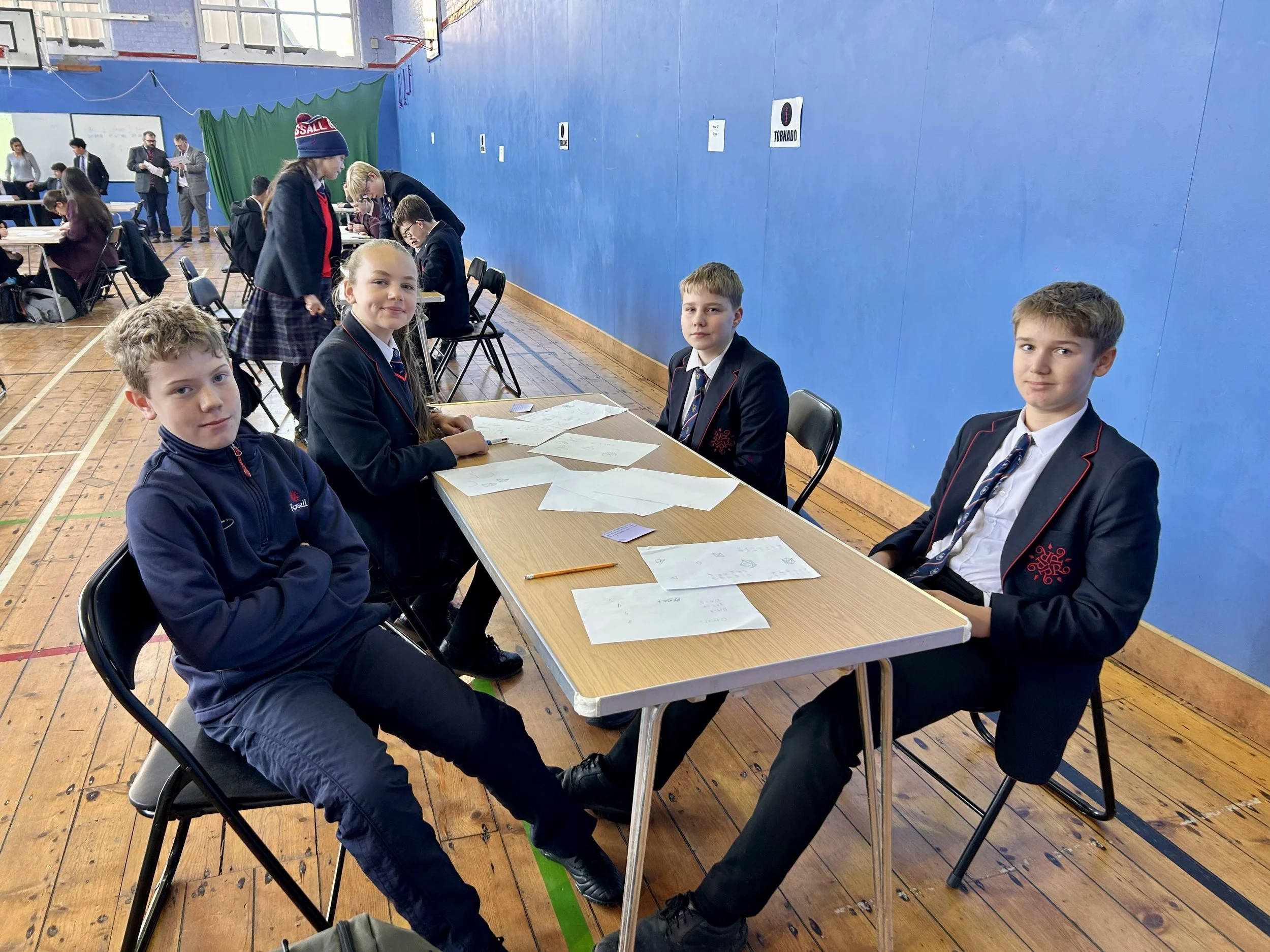
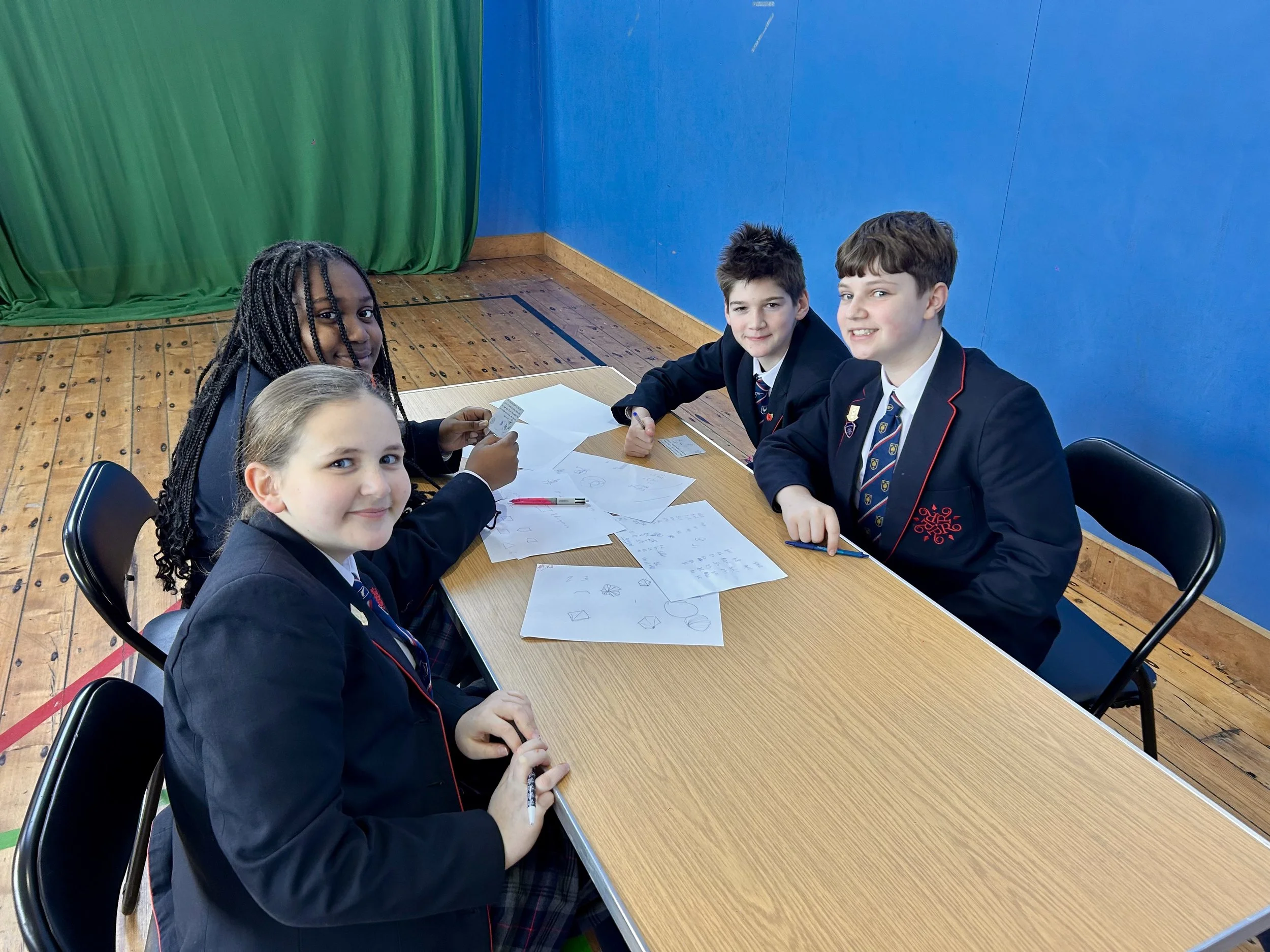
An Inspiring Maths Session with Sophie McClean from King’s College London
“Last Friday, Rossall had the pleasure of welcoming Sophie McClean, a PhD student from King’s College London, as our guest speaker for a special Mathematics Department event.
Sophie delivered an engaging and thought-provoking presentation that explored the fascinating connection between mathematics, creativity and everyday life. Her distinctive approach to the subject encouraged everyone to view mathematics in a new and exciting way.
Sophie’s talk highlighted how mathematical concepts can be expressed through shapes, patterns and colours, demonstrating that mathematics is not only about numbers and equations but also about visual imagination and design.
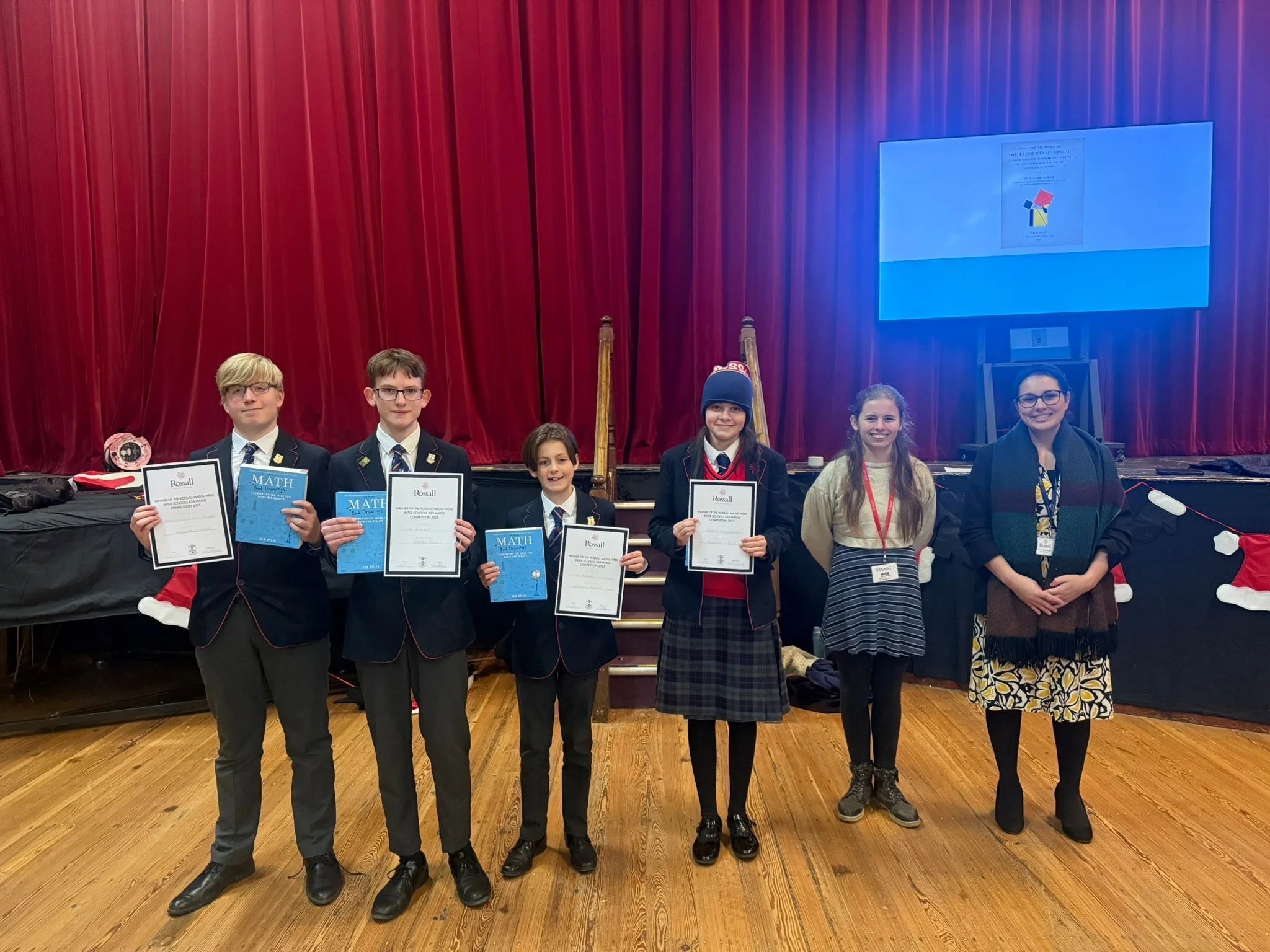
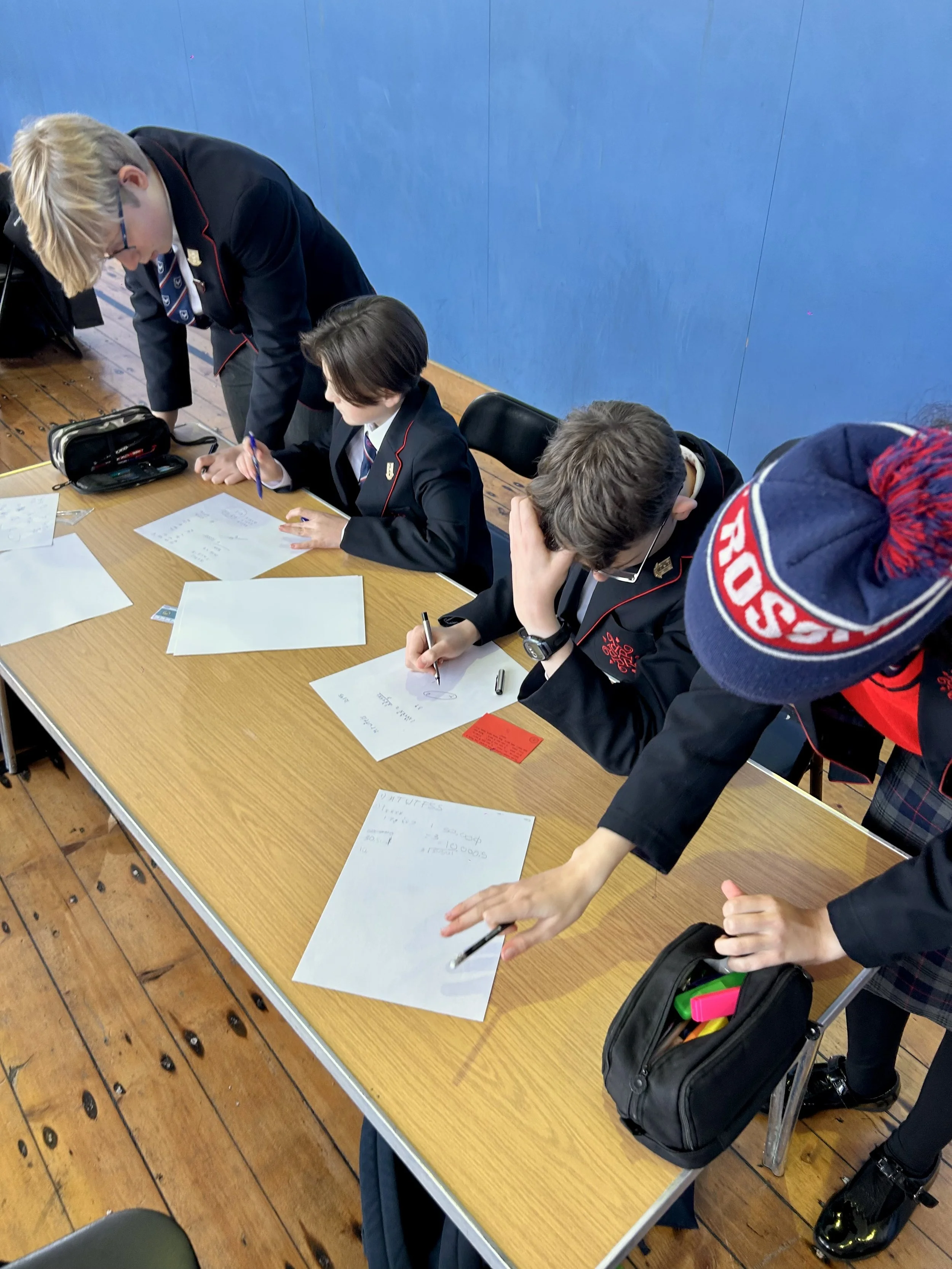
Following Sophie’s inspiring presentation, the event continued with the much-anticipated Inter-Schools Mathematics Competition. Rossall was delighted to host teams from Morecambe Bay, AKS and Montgomery High School, who competed in a series of demanding and intellectually stimulating challenges. Working under pressure and racing against the clock, teams put their problem-solving skills to the test in an atmosphere filled with excitement, determination and friendly rivalry.
For many students, this was their first experience of tackling a maths challenge as part of a team. The competition provided a fantastic opportunity to collaborate, think critically and apply mathematical knowledge in a competitive setting, all while building confidence and teamwork skills.
Overall, the day proved to be an enriching and highly enjoyable occasion, offering valuable insight for students considering future studies in maths. Sophie’s inspiring presentation, combined with the energy and enthusiasm of the competition, left a lasting impression and reinforced the message that mathematics can be both intellectually challenging and genuinely fun.”
- Luca G, Year 8
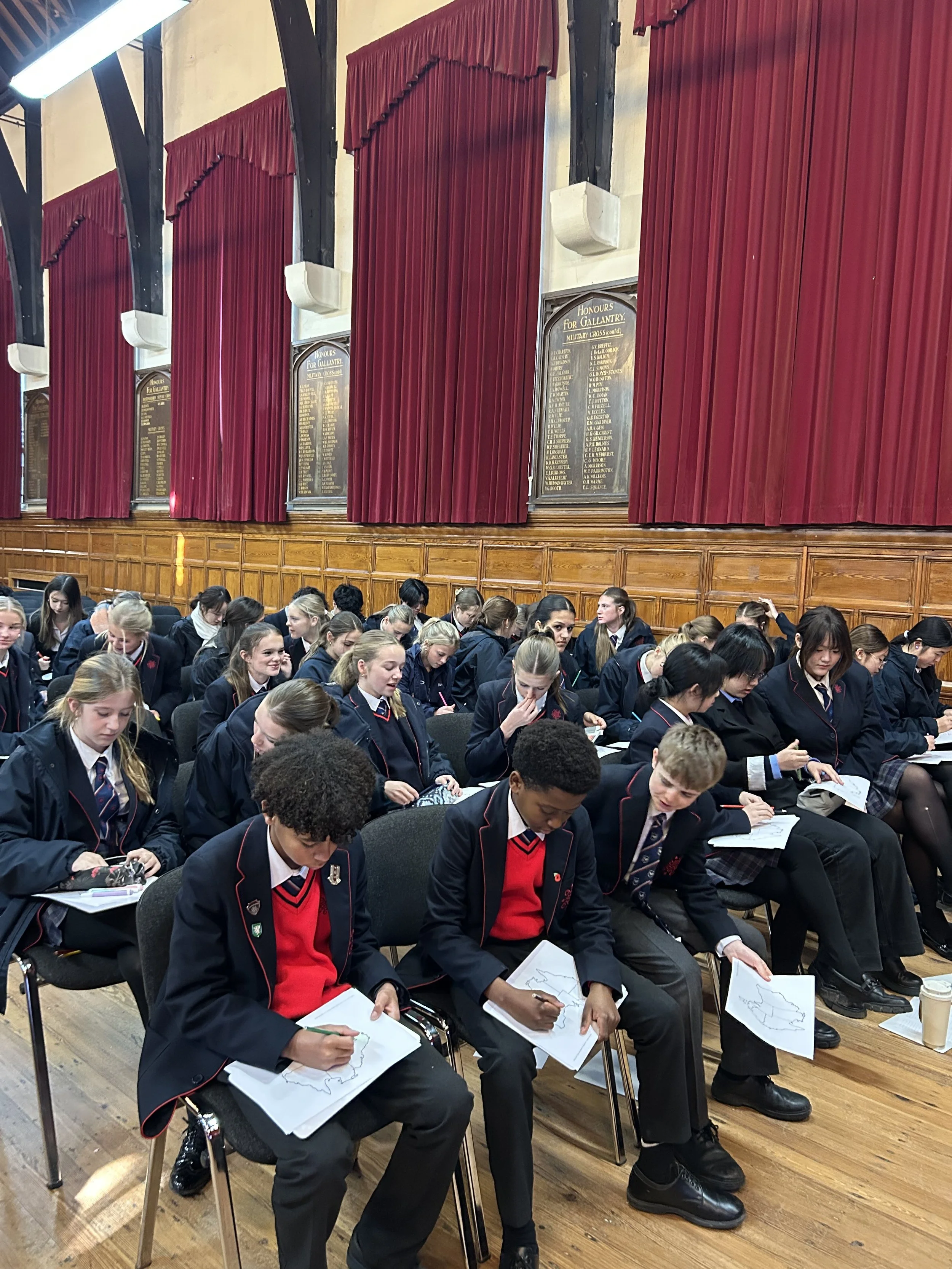
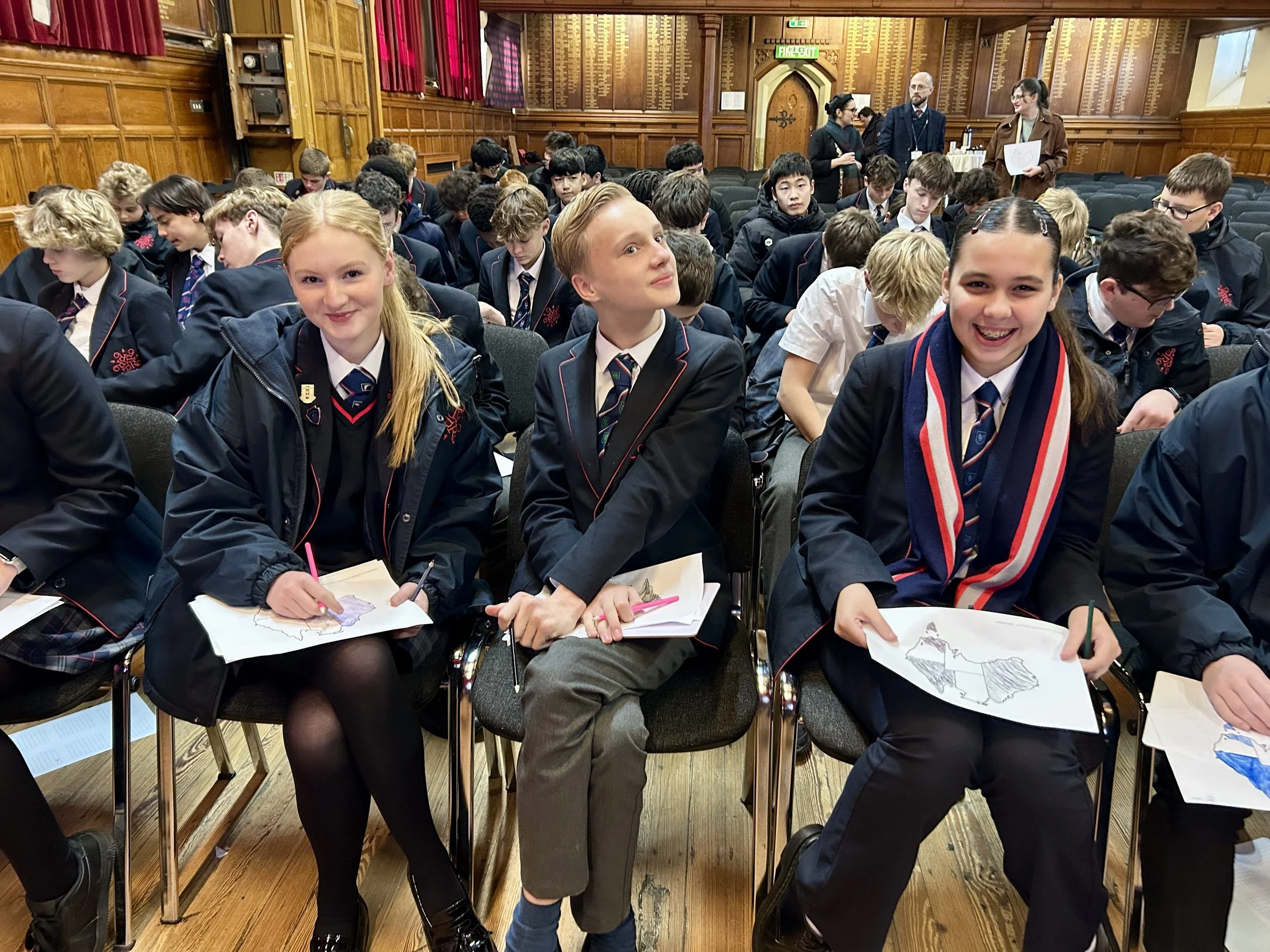
“The recent maths talk was incredibly interesting and thought-provoking. The theme was colouring in maths, with a focus on colouring areas so that no two adjacent areas were the same. We began with one of the many interactive parts of the talk. Maps were provided for us to colour using the least number of colours possible, following the rule mentioned before. It was a puzzling task. We then had the opportunity to create our own maps, where we discovered that all maps can be coloured in four colours or fewer, an extremely interesting fact that surprised us all.
After that, we moved on to placing tiles on an eight by eight grid with the corners missing. The twist was that tiles could only be placed in pairs that were touching. After a few minutes of trying, we realised this was impossible. To work this out, we had to colour the grid like a chessboard, alternating black and white, where each pair of tiles would need to contain one white square and one black square. Once we did this, it became clear that there were different numbers of white and black squares. It was a truly thought-provoking challenge. After completing a few variations of this puzzle, we moved on.
Using tetris-style shapes, we explored all the combinations of four-square shapes and were given one final task to consider: the idea that all of these shapes could fit into a rectangle. How could they fit? The talk ended without the answer so that we could try to solve it at home.
Overall, the talk was amazing, filled with clever ideas, enjoyable methods and, of course, plenty of maths.”
- Theo KB, Year 8
“The talk focused on two main ideas: how boundary lines and adjacent regions work, and how maps are coloured. Our first activity was to colour a map using as few colours as possible. Adjacent regions could not share the same colour, and most of us discovered that four colours were the minimum needed. Sophie then challenged us to create a map that required five colours, but we learned this was impossible. The maximum number of colours any map needs is four.
After the talk, we moved on to the maths competition. Teams of four, with two Year 9s and two Year 8s, raced to complete question cards as quickly as possible. My team worked really well together, even though many questions were much harder than expected. At one point, we spent ten minutes on a question that turned out to have been miscalculated by the markers, but luckily our answer was accepted.
The competition was fast-paced and full of energy, with teams running to swap cards and trying to stay ahead. We won by just one card, which made the finish even more exciting. The Year 8s came up with a strong strategy, and dividing the work between us helped a lot. Overall, it was a fun and intense experience that tested our teamwork and problem-solving skills.”
- Salma B, Year 9