
Year 11 Revision & Study Skills Day
“On Tuesday of this week, for their first day back after the Easter break, our Year 11 cohort stepped away from their traditional timetables to participate in a Revision and Study Skills Day. Guided by Guy Slocombe from Studyskillszone, the day was designed to empower them with the cognitive tools required to manage anxiety and maximise their revision and exam performance. By bridging the gap between cognitive science and daily habits, we ensure that our students are not just working hard, but working smart too.
To master their exams, students must first master the organ doing the heavy lifting: the brain. Neuroimaging research provides a stark visual warning against the "all-nighter" culture of cramming. Studies comparing normal sleep to sleep deprivation" (35 hours without sleep) during arithmetic tasks reveal a significant drop-off in cognitive activation. Simply put, sleep is not "time off" for the brain; it is the essential maintenance required for high-level reasoning. Understanding our biological architecture helps us reclaim control during high-pressure moments. We look at the brain in three functional layers:
The Primate Brain: The seat of higher-order thinking, logic, and exam-solving.
The Mammal Brain: The emotional center.
The Reptile Brain: The survivalist core focused on "fight or flight."
In a “highly anxious" state, the Reptile brain can hijack the system, shutting down the Primate brain’s ability to recall facts. By recognising where they sit on the spectrum of "Teenagers’ Attitudes to Exam Revision" - whether they are feeling "Not Bothered," "Last Minute Cramming," or "Super Stressed" - students can use the techniques below to settle the "Reptile" and re-engage the "Primate." To make room for high-impact habits, we must first clear away low utility techniques. These are often the most common habits because they feel productive… but science tells a different story.
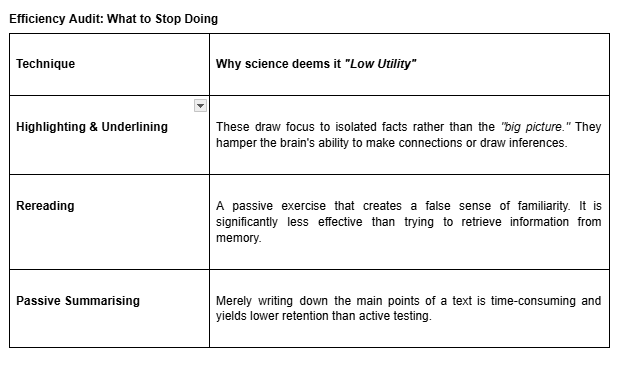
Our focus is on moving toward high utility techniques. Two strategies stand out for long-term mastery:
Distributed Practice: Instead of blocking or cramming one subject for five hours, students should spread study sessions over time. This "spaced" approach ensures material moves from short-term to long-term memory.
Practice Testing (Active Recall): This is the act of forcing the brain to call information to mind without the safety net of notes. Students are encouraged to use digital tools like Quizlet, StudyBlue, and FlashCardMachine to make self-testing a daily habit.
Most students prefer blocking (focusing on one topic entirely) because it creates an illusion of competence. It feels easier, but the knowledge is shallow. Interleaving - mixing different topics or types of problems in one session - is cognitively demanding. While it feels harder, this desirable difficulty is exactly what builds true exam mastery and deeper engagement.
During the workshop, students were introduced to practical and active revision methods. These tools are effective because they require information reduction and physical manipulation, which triggers active recall.
Mini-books: A single sheet folded into an 8-page format. Use this to reduce an entire chapter into eight essential bullet point anchors.
Flashcards: Cards folded to hide definitions. Write a key term/question on the outside and the definition underneath. Stick these into exercise books for quick, repeated self-testing.
Topic Wheels: Divide an A4 page into sections like a pizza. Use this to clarify how different concepts within a single topic relate to one another.
Hexagon Themes: Write a summary of a key idea on each printable hexagon. Students then arrange and rearrange them on a desk to physically map out the sequence and links between themes.
The Diamond Fold-out: A creative format that forces students to reduce their notes to the absolute essentials.
The Grid/Cheat Sheet: A single-page "at a glance" summary where a topic is divided into boxes, combining sketches and text to sum up a theme.
Structure is the most effective antidote to anxiety. In a previous blog, I advocated for the Pomodoro Method, a technique supported by a 2025 meta-analysis which found that time-structured interventions consistently improved focus and reduced mental fatigue compared to self-paced breaks.
The Steps:
Choose a specific task (e.g., "Practice Testing on Elizabethan England").
Set a timer for 25 minutes.
Work exclusively on that task - no phones, no music with lyrics.
Take a 5-minute break (move away from the desk).
After four cycles, take a longer 30-minute break.
To support this, students can download free apps such as Flow, Paymo, Roundpie, or Momentum.
We also recommend a Two-Tiered Approach to planning:
The Long-Term Plan: The "Big Picture" looking at the week-by-week stretch until exams.
The Short-Term Plan: The "Weekly Focus" which must include prep, specific revision slots, coming in for the Saturday Papers and attending the subject clinics and - crucially - scheduled time for rest and leisure.
At Rossall, many of our senior leaders are also parents. We know that the challenge is real. We hear the familiar refrains: "I can't stand the arguments and stress... it always ends up with them saying 'It's my life' and slamming the door." To move from conflict to partnership, focus on these two frameworks:
The Five Pillars of an Effective Study Environment
Ensure your child has:
A Dedicated Desk: A flat, clear workspace.
A Comfortable Chair: To support posture and reduce physical fatigue.
Good Light: To prevent eye strain and maintain alertness.
Ventilation: Fresh air is fuel for the "Primate" brain.
Reduced Distractions: A "no-phone zone" to prevent cognitive switching.
The Six Roles You Can Play
Provider: Supplying the tools, space, and nutritious snacks.
Study Buddy: Helping with active recall (testing them with flashcards) when asked.
Sounding Board: Listening as they explain a concept back to you (Self-Explanation).
Adviser: Helping them break a mountain of work into manageable "molehills."
Project Manager: Checking in on the weekly timetable to ensure they are balancing work with rest.
Go-Between: Reaching out to us at school if you notice they are struggling.
Revision is not a sprint; it requires stamina, strategy, and a positive mindset. By replacing low-utility habits with the science of active recall and distributed practice, our Year 11 students can step into the exam hall with quiet confidence.
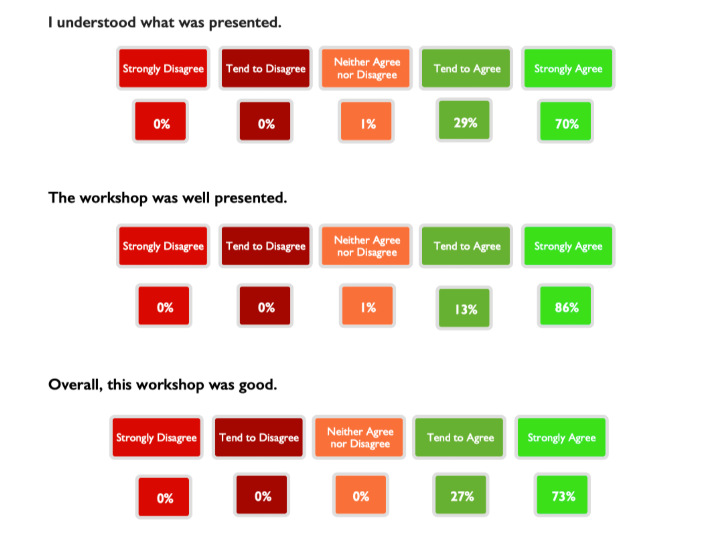
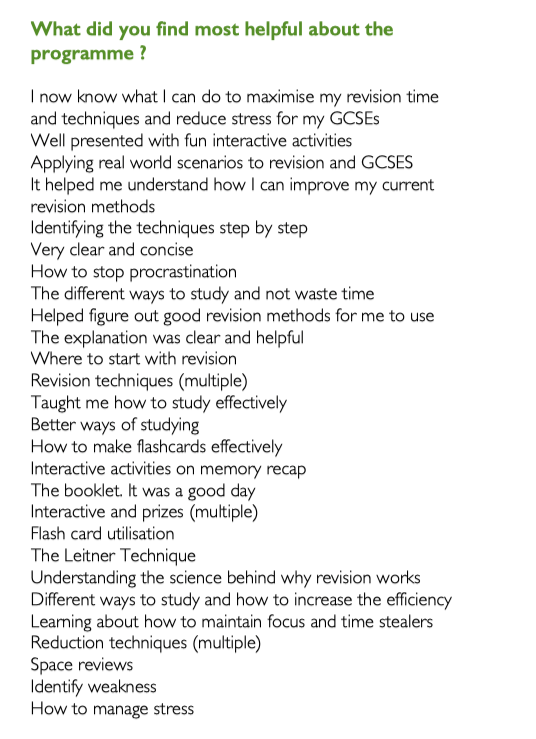
What did our Y11 students think about the day?”
— Mr David Clarke, Deputy Head (Academic)
